

Exam Format 101: What Every College Student Needs to Know Before Test Day
The panic students feel before a final has nothing to do with the material and everything to do with not knowing the exam format. Once you know the exam structure you’re dealing with, the studying part actually gets easier.
Struggling to Balance a Job and Finals Week?
Between shifts and study guides, something has to give. You can safely have our writers handle the paper while you handle the pressure.
Every professor grades differently, sure, but almost every college exam falls into one of six categories. Once you know the test format, you’re no longer playing the what-if game and can plan, prepare, and practice with a strategy.
This guide breaks down different types of exam formats, what to expect in the room, and what actually moves your grade.
If a paper is taking up your revision time, our assignment team can take it off your plate so you can prepare for the final exam format.
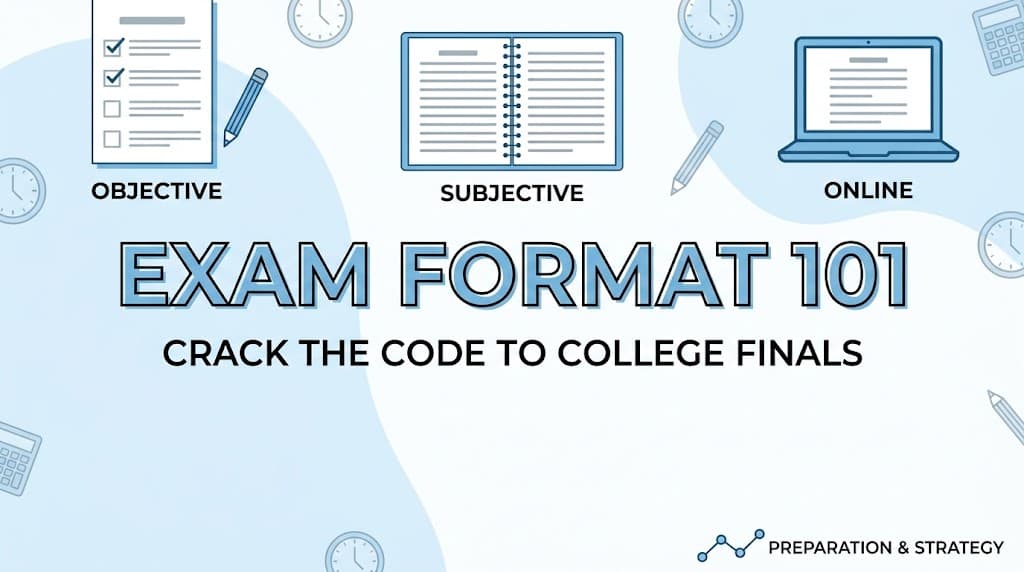
Why Most Students Fail
In my years of lecturing, I’ve realized most students don’t fail exams because they didn’t study. They fail because they studied the wrong way for the format in front of them. Memorizing definitions for a written exam format final, or writing paragraph-length answers on a 60-question scantron when you only have 45 minutes to complete it, is a mess.
Twenty minutes spent figuring out the exam pattern before you study for it will save you hours of wasted review, and it’s the single easiest grade boost nobody talks about.
Understanding Different Exam Formats
Here’s the thing that most students miss: your specific university exam format dictates your entire study strategy.
If you don’t step back and analyse how is an exam formatted, you’ll walk into the lecture hall prepared for the wrong fight.
Most Common Exam Formats
Multiple-choice, true/false, and matching questions with one correct answer only.
Essay and short-answer questions graded on analysis, reasoning, and supporting evidence.
Combines multiple-choice and written questions with separate scoring for each section.
Assesses real-world skills through demonstrations, practical tasks or timed activities.
Remote exams with proctoring, lockdown browsers, timers and secure testing platforms.
Allows approved resources while evaluating critical thinking and applied knowledge.
How to Handle Different Types of Test Formats
Your exam setup decides your study approach. You cannot prepare for a multiple- choice exam or a practical exam the same way you prepare for a full essay under a time limit. Getting the basics out of the way is half the battle which is why many students choose to pay someone to do my homework so they can dedicate their time and effort to the big exam ahead.
Strategic Ways to Ace Each Format
Objective Exam Format
For these tests, it is all about your time. In most cases, you are only allowed less than a minute to answer each question. As such, you should avoid spending too much time on one question. Instead, you should read and answer the easiest question first and move on to the next one. This way, you will leave enough time to finish the examination.
Subjective Exam Format
Timing is essential in this kind of exam. It is always tempting to spend more time answering the first question than others, but if you do not time yourself properly, you may end up with just a few minutes to answer the last question. Make sure you time yourself wisely so that you can have equal time for each section.
Practical Exam Format
You have to time your physical steps for these tests. Since you are moving around a lab or typing out code under pressure, you need to practice the steps at home until they feel automatic. If you fail to time your skills practice, you may not be able to do well in the examination.
Hybrid Exam Format Strategy
In Hybrid, the grading weight is split between objective and subjective formats.
For example, a 30-question multiple-choice section may be worth 60% of the total exam grade, while the remaining 40% is covered by two short-answer questions.
For that type of exam, the easiest way to get the most points is to read the point distribution before writing a single word.
Always look for a bonus questions strategy. Answer questions you’re confident about first, and then quickly answer any bonus questions. Don’t wait for the end when you’re tired and running out of time. A few points could easily make it a B+ instead of a B on a scoring hybrid final.
Online Exam Format
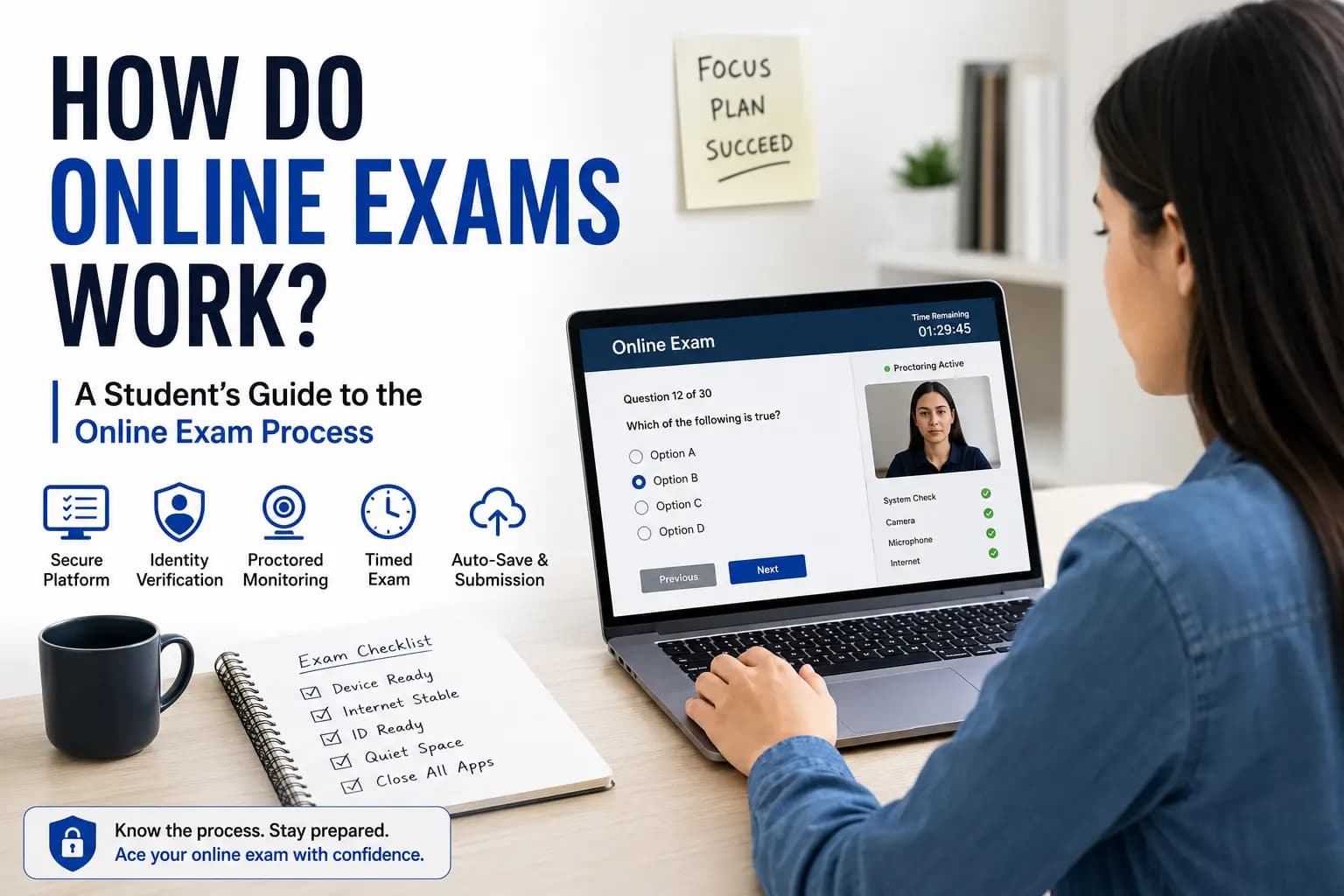
The danger is not in the pacing per question, but in the pacing around the platform. Know whether the platform auto-saves or auto-submits, and whether you can go back to a skipped question, assuming that you can and that being wrong on it costs you that answer, tech check or not.
Open-Book / Take-Home Format
The issue here isn’t that you’re running out of time on the questions, it’s that you’re running out of time deciding what questions to include. Do not flip pages through your materials in the middle of your answer – skim them once to make a mental map before you begin the writing.
How Exams Are Scored and Weighted
Grading scores can vary widely by department, but there are some general trends that you are likely to see at most institutes.
- High-Stakes Weighting: Final exam questions are often cumulative and worth somewhere between 20% and 40% of your grade
- The Week One Rule: This heavy weighting is exactly why the exam guidelines your professor hands out in week one should not be read for the first time in finals week, but rather should be read again.
Point Value Pacing Reference
When managing your time on a mixed-format test, use this simple rule. Look at how many points each question is worth, not the question order:
| Question Type | Typical Grade Weight | Recommended Time Split |
| Objective section | 40-60% of total | ~30 seconds per question |
| Short-answer prompts | 15-20% of total | 3-4 minutes each |
| Subjective essay block | 30-40% of total | 25-30 minutes total |
Strategic Execution Checklist
- Bank Options First: Always attempt the objective section first when a paper mixes formats.
- Energy Management: Those questions take the least mental energy since you just have to select an option.
- Build Momentum: Once you finish them quickly, you can then focus on the writing part.
Proven Strategies to Prepare for Any Format
Know the Format First
- Check Early: Check the syllabus or follow up with an email to your professor if it’s still unclear.
- The Variations: Figure out whether you’re getting an objective, subjective, hybrid, or open-book final.
Ask the Right Question in Office Hours
- What to Avoid: Never walk in and ask “what’s on the test?” No professor is going to give you a straight answer.
- What to Say Instead: Try: “Should I focus my studying on core vocabulary, or on practicing arguments from our case studies?”
- The Result: That question tells them you’re serious, and most will tell you almost exactly what to expect.



Pre-Exam Prep: Timing and Technology
- Pacing Practice: Flipping over your notes is not the way to go. Taking practice tests that are timed will help you with your pace. Remember, when taking a multiple-choice exam, knowing the answer is one thing, but being able to bubble it in on time is another.
- Tech Verification: For an online exam format, run a full tech check the day before. Check your system, including, but not limited to your lockdown browser, your webcam, and your internet connection. The last thing you want is to lose points on an exam because of a technology error. This is one situation where you can’t risk it.
Overcoming Multiple-Choice Anxiety
The Cause: This anxiety is due to the feeling of being overwhelmed. Your brain can get confused when presented with four similar-looking answer options.
The Fix: Cover up the choices and read only the main question first. Try to answer it in your head before you even look at the options. This keeps the wrong answers from tricking you.
Overcoming Writer’s Block
The Cause: This one comes from perfectionism. An empty blue book or blank sheet of paper can cause anyone to freeze.
The Fix: Skip the introduction entirely and start with the body paragraph you feel most confident about. Once you get into a rhythm, you will be able to write the intro and conclusion easily.
Beat the Online Timer
- The Hidden Stressor: The countdown clock in the corner of the screen causes more panic than the actual questions do.
- The Strategy: If the learning platform allows, hide the clock and set reminders that prompt you to check the time only at designated intervals.
- System Relief: When you are preparing for a particularly difficult exam, such as Business Law , in which it seems impossible to properly prepare, your best option is to hire an expert to take my business law exam and secure your grade .
University Exam Guidelines Worth Knowing
Most schools publish their own exam guidelines, but a few rules show up almost everywhere:
- Academic integrity policies: Closed-book, open-note, or open-internet. Know which one applies before you sit down, because the penalties for guessing wrong can be dangerous.
- Accommodation requests: If you have a documented disability, you have the right to request extra time or a separate room under ADA policy at most public universities. You have to send the request in weeks, not day before the exam.
- Retake and appeal rules: Some programs let you retake a failed final; others do not. Appeal deadlines can be as short as five business days, so don’t wait.
- Proctoring and ID rules: Bring a physical student ID even for online exams. Most lockdown browsers require photo verification before the timer starts, and showing up without one can cost you the whole testing window.
- Tracking Safeguards: If tracking systems add extra pressure, you can always choose to pay someone to take my online exam to maintain your GPA.
Common Mistakes Students Make With Exam Format
Most points lost on exams have nothing to do with not knowing the material.
- Misreading the instructions: Answering three essays when only two were required costs points before you’ve even started writing.
- Bad time allocation: Spending 20 minutes on a 2-point question and rushing the 20-point one is one of the most common mistakes ever made.
- Not confirming submission rules: Not checking which exam paper format you’re dealing with can mean losing work you thought was saved.
- Answering a different question than the one asked: A beautifully written response to the wrong question still earns close to zero credit.
- Skipping the review pass: “I’m sure I got it right” is exactly the moment small, fixable errors can occur. Recheck your paper.
Conclusion
Every exam format needs different preparation. Objective and hybrid tests want recognition and speed. Subjective and open-book ones want argument and evidence. Practical exams want repetition under pressure. Online layers a tech check on top of whatever’s underneath.
Learn the exam structure ahead of time, get expert help with proctored exam setups if the tech feels overwhelming, and the format stops being the scary part.
Frequently Asked Questions
What is the most common exam format in college?
How do I know what exam format my professor will use?
Are online exams harder than in-person ones?
What should I do if a professor refuses to share the exam pattern ahead of time?
Can I request extra time for an exam?
What's the difference between exam format and exam structure?
What is the best time to begin studying according to the type of exam?
How to study for an open book test?

Need Help Managing Exam Season?
Our team of experts will help you tackle papers, case studies and coursework so you can concentrate on the format that requires the most preparation this semester.
Get Started Today