
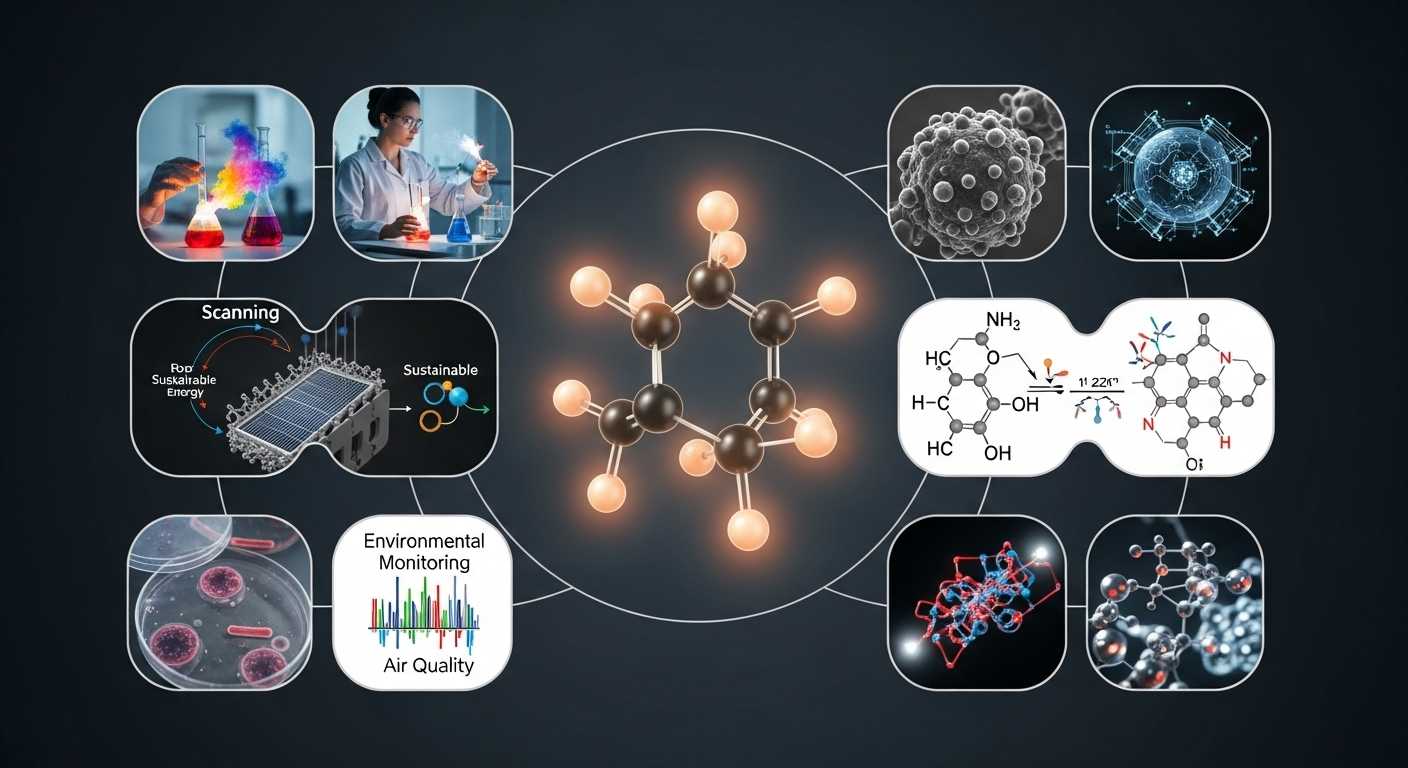
Top Chemistry Research Topics for Students 2026
Below are categorized, up-to-date, and high-relevance research topics across the main branches of chemistry.
1. Organic Chemistry Research Topics
Organic chemistry remains one of the most challenging yet rewarding fields of study. It focuses on the structure, properties, and reactions of carbon-based compounds that form the basis of life and materials.
Trending Topics:
- Sustainable organic synthesis using green catalysts
- Advances in photochemical reaction mechanisms
- Polymerization reactions for biodegradable plastics
- Organic semiconductors in electronic materials
- Role of organic molecules in medicinal drug design
- Stereochemistry and its impact on pharmaceutical effectiveness
Organic research combines creativity and logic, pushing students to explore how carbon compounds can revolutionize industries from healthcare to energy.
2. Inorganic Chemistry Research Topics
Inorganic chemistry deals with materials that don’t rely on carbon frameworks, including metals and minerals. Research here is crucial for nanotechnology, catalysis, and materials science.
Trending Topics:
- Metal-organic frameworks (MOFs) for gas storage
- Transition metal complexes as catalysts
- Synthesis and characterization of coordination compounds
- Nanostructured materials for energy storage
- Role of rare-earth metals in electronics
- Study of inorganic pigments and their environmental effects
3. Physical Chemistry Research Topics
Physical chemistry connects physics and chemistry, studying how matter behaves on molecular and atomic levels. It involves thermodynamics, kinetics, and spectroscopy.
Trending Topics:
- Reaction kinetics in extreme environments
- Computational chemistry simulations for molecular design
- Quantum mechanical models in thermodynamics
- Energy transfer in chemical reactions
- Spectroscopic analysis of molecular structures
- Photochemistry in solar energy conversion
4. Analytical Chemistry Research Topics
Analytical chemistry enables scientists to understand chemical composition using precision-based techniques. It’s a cornerstone for all scientific disciplines, from forensics to environmental testing.
Trending Topics:
- Chromatographic analysis in drug purity testing
- Spectroscopic methods for nanomaterial characterization
- Environmental pollutant detection using mass spectrometry
- Advances in microfluidic lab-on-a-chip systems
- Chemometric modeling for quality control
- Development of biosensors for rapid diagnostics
5. Biochemistry Research Topics
Biochemistry bridges chemistry and biology to explain the molecular mechanisms of life. It’s a rapidly growing field linked to medicine, genetics, and biotechnology.
Trending Topics:
- Enzyme kinetics and metabolic pathway regulation
- Protein folding and its role in neurodegenerative diseases
- DNA repair mechanisms and mutation studies
- Biochemical impact of nutrition and diet on health
- Advances in drug-protein interactions
- Use of CRISPR technology in biochemical research
6. Environmental Chemistry Research Topics
Environmental chemistry addresses pollution, sustainability, and the chemistry of natural systems vital for global climate initiatives.
Trending Topics:
- Green chemistry techniques for pollution control
- Chemical analysis of water and soil contamination
- Atmospheric chemistry and ozone layer recovery
- Renewable energy production via chemical reactions
- Carbon capture and storage materials
- Degradation of plastics and chemical recycling
How to Select the Best Chemistry Research Topic
Choosing a topic that’s both manageable and meaningful requires strategy. Follow these key steps:
- Assess your interest area: Choose a branch that fascinates you.
- Check resources: Ensure you have lab access, equipment, and data sources.
- Review recent literature: Explore new publications to find knowledge gaps.
- Define your scope: Avoid overly broad or too narrow topics.
- Focus on real-world application: Practical topics make your work more impactful.
Building a Research Framework
Once you’ve chosen your topic, develop a framework that guides your research process:
- Define your research question or hypothesis.
- Conduct literature review and identify data sources.
- Design experiments or simulations.
- Analyze results using proper statistical tools.
- Discuss implications, limitations, and future directions.
A well-structured framework helps you stay organized and improves the academic quality of your research.
Pain Points Students Commonly Face
Many students struggle to select a relevant, feasible topic or to narrow their focus from a broad concept. Others face challenges with lab resources or data collection. Additionally, understanding complex chemical theories or reaction mechanisms can be intimidating. The key is to break large problems into smaller questions and seek guidance early from mentors or professors.
If organic reactions seem overwhelming, revisit the basics with our detailed guide on why organic chemistry is hard to simplify your foundation before advancing to research.
Conclusion
Chemistry research opens doors to scientific discovery and global progress. The right research topic helps you develop analytical, experimental, and creative thinking skills that extend far beyond the lab. As you explore these top chemistry research topics for 2026, remember to choose one that reflects your passion and curiosity.
Whether you investigate organic reaction mechanisms or environmental sustainability, your contribution will add value to a field that’s constantly shaping the future of science, technology, and society.