Data Science and Advanced Analytics
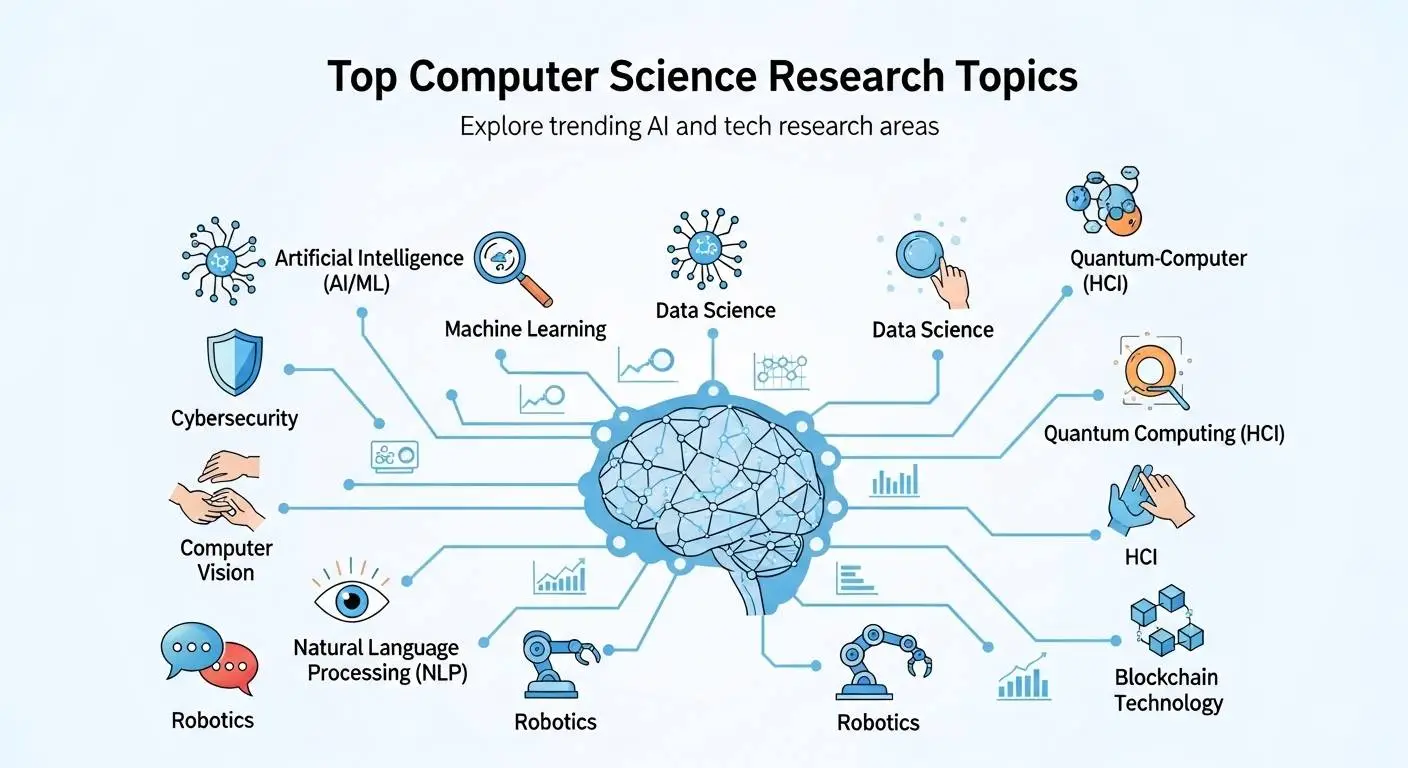
Data Science integrates statistics, computing, and domain expertise to extract meaningful insights from large datasets.
Big Data Optimization
Research can focus on scalable storage systems, distributed computing efficiency, or real-time data processing techniques.
Predictive Modeling
Students may investigate algorithm accuracy improvement, feature engineering strategies, or bias reduction in predictive systems.
Natural Language Processing
Natural Language Processing research includes language modeling, sentiment analysis, automated summarization, and multilingual AI development.
Core Computer Science Research Domains
Some foundational areas continue to generate strong academic interest.
- Distributed systems scalability
- Cloud computing resource allocation
- Blockchain consensus mechanisms
- Quantum-resistant cryptography
- Internet of Things security models
- Software engineering automation
- Database optimization techniques
Each of these topics offers both theoretical depth and applied research opportunities.
Advanced Computing and Future Technologies
Technology innovation continues to expand into highly specialized domains.
Quantum Computing
Quantum Computing explores algorithms based on quantum mechanics principles. Research topics include quantum cryptography, quantum algorithm optimization, and hybrid classical-quantum systems.
Cloud and Edge Infrastructure
Cloud Computing research addresses virtualization, cost optimization, container orchestration, and serverless architectures.
Internet of Things
Internet of Things studies focus on device interoperability, smart city systems, and energy-efficient communication protocols.
Common Challenges Students Face When Selecting Research Topics
Choosing the right topic is often difficult due to:
- Overly broad subject areas
- Limited dataset availability
- Lack of practical implementation ideas
- Difficulty aligning topic with career goals
- Rapid technological changes
- Unclear research gap identification
Students frequently struggle not because of limited ability but because they lack structured guidance in narrowing their focus. A well-defined research question and realistic project scope are essential for success.
How to Choose the Right Computer Science Research Topic
Selecting an effective topic requires balancing innovation with feasibility.
Identify a Research Gap
Review recent journal publications to find unresolved challenges or limitations in existing solutions.
Assess Technical Feasibility
Ensure the tools, datasets, and computational resources required are accessible.
Align with Career Goals
Choose a specialization aligned with long-term professional interests such as AI engineering, cybersecurity analysis, or data science.
Students managing heavy coursework or assessment schedules can also explore structured academic resources through exam support services when balancing research and testing demands.
Why Computer Science Research Topics Matter for Academic Growth
Strong research topics demonstrate analytical thinking, technical competence, and innovation. Universities increasingly value interdisciplinary research combining AI, cybersecurity, healthcare, and cloud systems. High-impact research enhances graduate school applications and employment opportunities.
For broader academic support and structured learning guidance, students may also review comprehensive educational resources available at academic assistance platforms.
Conclusion
Selecting from top computer science research topics requires understanding current technological trends, academic standards, and practical applications. Emerging areas such as artificial intelligence, cybersecurity, data science, quantum computing, and cloud systems offer significant research potential. The key to success lies in identifying a focused research gap, ensuring feasibility, and aligning the topic with long-term academic and career goals. With careful planning and structured exploration, students and researchers can develop meaningful, future-ready projects that contribute to innovation and academic excellence.