

Why Homework Should Be Banned and What Should Replace It
Homework has long been considered a pillar of academic success, but growing research suggests it may be doing more harm than good. This article explores why homework should be banned and what innovative, evidence-based approaches could replace it to improve learning outcomes and student well-being.
Exhausted by After-School Work?
We agree homework is draining! That is exactly why thousands of students pay someone to do my homework every day.
For decades, homework has been seen as essential for reinforcing classroom learning and building discipline. Yet today’s students face increasing stress, declining mental health, and limited personal time. Leading educators and psychologists to question whether homework still serves its intended purpose. Studies by institutions such as Stanford University and the OECD have shown that excessive homework offers minimal academic benefit and can even harm motivation and creativity. Understanding why homework should be banned requires examining both its negative effects and the better alternatives that could replace it.
We completely agree that after-school work is exhausting, which is exactly why thousands of students pay someone to do my homework every single day.
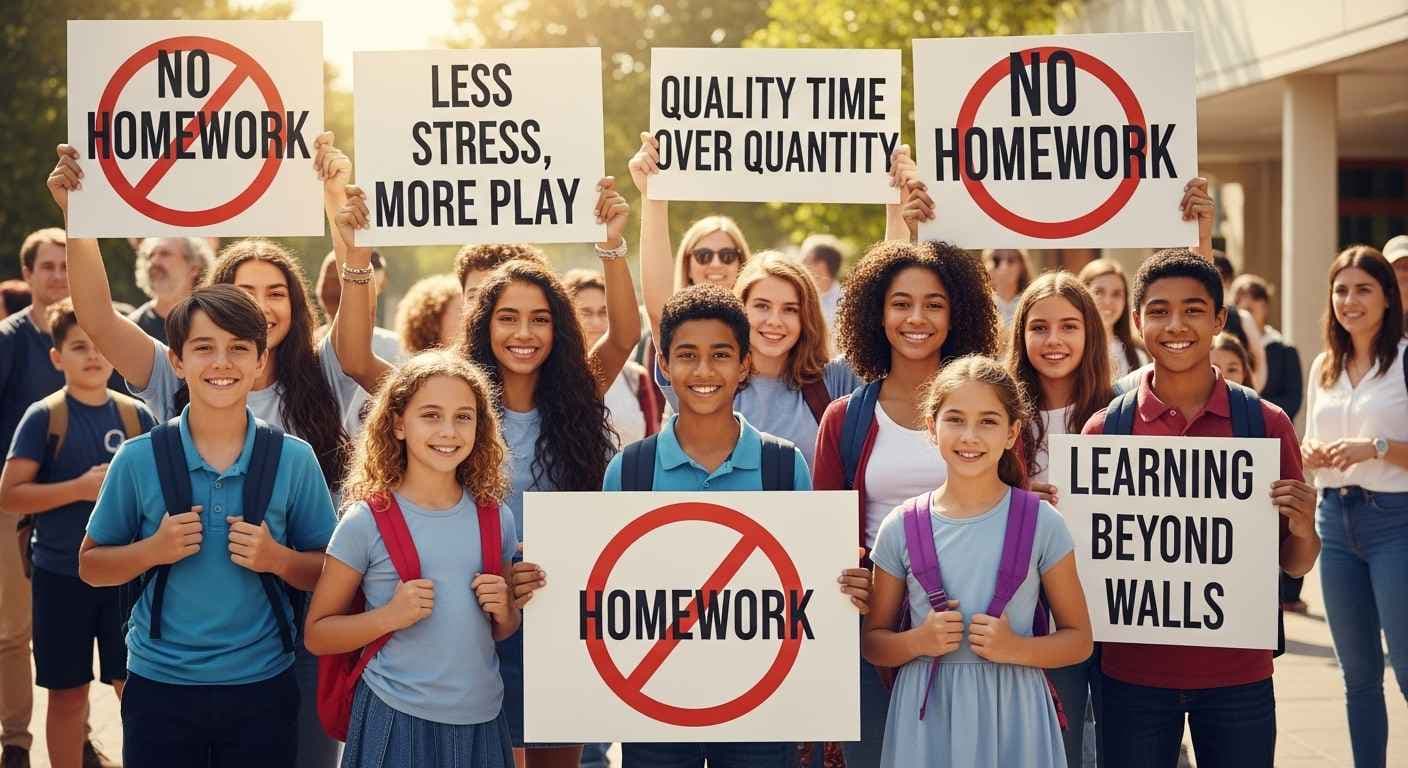
Why Homework Should Be Banned
Homework has become a symbol of outdated education systems that prioritize repetition over understanding. The modern learner needs balance, creativity, and real-world engagement not hours of repetitive worksheets.
The Psychological Toll of Homework
Research from the American Psychological Association shows that homework-related stress is one of the most common sources of anxiety among students. Sleep deprivation, irritability, and burnout are direct results of excessive academic load. Instead of enhancing performance, homework often reduces focus and enthusiasm for learning.
The mental toll of endless assignments is huge, so protect your peace and tell us to do my psychology homework for you.
Key Reasons Why Homework Fails Students
Constant workload prevents proper rest and cognitive recovery.
Long hours of homework reduce family bonding time.
Students without home resources are unfairly disadvantaged.
Rigid assignments discourage critical and independent thinking.
Overload leads to disengagement and academic exhaustion.
Memorization replaces deep understanding and problem-solving.
The Academic Evidence Against Homework
Education experts such as Alfie Kohn and John Hattie argue that homework has little measurable impact on achievement, especially for younger students. Hattie’s meta-analyses reveal that homework ranks low among factors influencing learning outcomes. When students are overloaded, performance often declines rather than improves.
What Should Replace Homework
The real question isn’t only why homework should be banned, but what can take its place. Modern education systems, like that of Finland education system, show that alternative methods can yield better academic and emotional results.
Have to read 50 pages of literature tonight? Just ask our experts to do my english homework for me and go straight to sleep.
Experiential Learning in the Classroom
Hands-on activities, project-based learning, and inquiry-driven lessons encourage curiosity. Instead of assigning take-home tasks, teachers can facilitate in-class workshops that allow students to explore real-world applications of their studies.
Three Effective Alternatives to Homework
- Collaborative Projects: Students learn teamwork, research, and presentation skills.
- In-Class Practice: Focused sessions ensure mastery without after-hours stress.
- Teacher Feedback Loops: Continuous feedback replaces repetitive grading and enhances understanding.
How Students Learn Better Without Homework
The key to successful learning is engagement, not endurance. Schools that emphasize self-directed study and teacher-guided reflection consistently see higher satisfaction and retention rates.
Encouraging Independent Learning
Removing homework doesn’t mean removing responsibility. Structured self-learning time during school hours helps students take ownership of their growth.
Role of Technology in Modern Learning
Digital platforms can offer interactive experiences without overburdening students. Resources such as Homework Help Services
can support students through guided tutoring rather than traditional assignments.
Balancing Focus and Freedom
Students who struggle to focus outside school can benefit from learning techniques covered in How to Focus on Homework. Once schools shift away from traditional homework, students can channel that focus into personal projects or skill development.
If you are actively procrastinating right now, you might want to learn how to focus on homework to get it over with quickly.
Key Points Supporting the Ban
- Excessive homework reduces motivation and academic curiosity.
- It deepens inequality between students with and without support at home.
- Studies show minimal correlation between homework and academic success.
- Countries with limited or no homework perform equally well academically.
- Removing homework improves mental health and family relationships.
- Replacing it with experiential learning promotes lifelong skills.
Stop suffering through toxic workloads and pay to do my history homework with ScholarlyHelp to reclaim your evenings.
Education Systems That Prove It Works
Countries like Finland and Denmark demonstrate that removing homework does not compromise academic performance. Instead, students engage more deeply in class and report higher happiness levels. The UNESCO and Center for Public Education have both highlighted these systems as models for equitable, modern education reform.
Teacher-Led Transformation
Educators can transition gradually by introducing classroom-based projects and flexible feedback sessions, ensuring the curriculum remains rigorous without overwhelming students.
Policy-Level Changes
The National Education Association and Harvard Graduate School of Education recommend aligning policies with well-being frameworks, emphasizing critical thinking over repetition.
Pain Points: Why This Matters
- Student Burnout: Chronic fatigue and loss of motivation from excessive workloads.
- Parental Stress: Families struggle to balance homework assistance with other responsibilities.
- Equity Gaps: Students from disadvantaged backgrounds face unfair barriers.
- Teacher Overload: Grading piles of homework reduces time for creative teaching.
- Lost Joy in Learning: Homework turns curiosity into obligation, stifling passion.
Conclusion
Homework has long been seen as a necessity, yet growing evidence shows it may be outdated and counterproductive. Banning homework doesn’t mean lowering standards it means redefining them. By replacing homework with experiential, collaborative, and feedback-driven methods, schools can nurture curiosity, balance, and deeper understanding. Education reform isn’t about doing less; it’s about learning smarter, together.
And if you want total freedom, you can even request our pros to take my online class for me for the rest of the semester.
Frequently Asked Questions
Why should homework be banned in schools?
What are the disadvantages of homework?
Does banning homework affect academic performance?
What can replace homework in education?
How does homework impact mental health?
Do teachers support banning homework?
What can parents do if their child is overwhelmed by homework?
How does banning homework promote equality?





Take Back Control of Your Schedule!
Never pull an all-nighter again. Simply pay someone to do homework online and breathe easy.
Do My Homework